Gunotsav 2.0, focusing on school accreditation and holistic development. Gunotsav Gujarat Primary School News 2026, the program continues to play a critical role in evaluating and upgrading the educational standards of government and private primary schools.
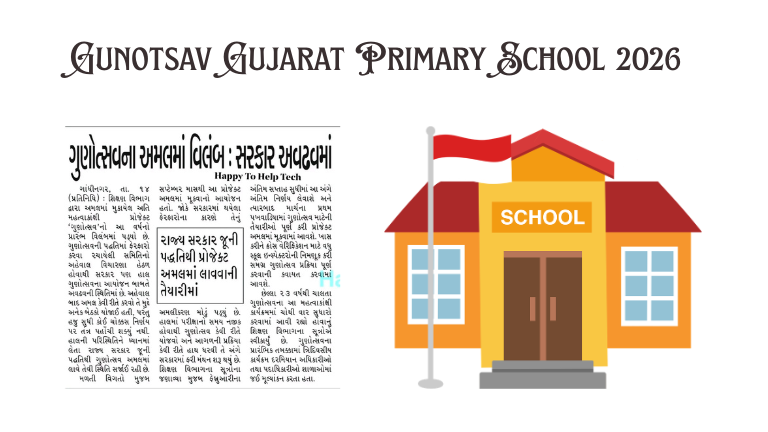
As of February 2026, the Gujarat Government’s Gunotsav 2.0 (School Accreditation) initiative remains the core framework for evaluating and improving the quality of primary education in the state.
Following the implementation of the National Education Policy (NEP) 2020, the assessment process has evolved significantly to focus not just on physical infrastructure, but on actual learning outcomes and digital integration.
## Key Details for Gunotsav 2.0 (2026)
### 1. Evaluation Structure
The evaluation is no longer just a one-time annual visit. It is now a continuous process managed by the Gujarat School Quality Accreditation Council (GSQAC).
- Self-Assessment: Schools must complete a self-evaluation, which now carries roughly 20% weightage in their final grade.
- External Verification: School Inspectors (SIs) and higher-ranking officials conduct surprise visits and cross-verification.
- Digital Monitoring: The Vidya Samiksha Kendra (VSK) in Gandhinagar uses real-time data to monitor teacher and student attendance, as well as periodic test results.
### 2. Grading Metrics
Schools are graded on a scale from A+ to D based on four main areas:
- Scholastic (90% weightage): Reading, writing, and numeracy skills (Foundational Literacy and Numeracy – FLN).
- Co-scholastic: Extracurricular activities and life skills.
- Community Participation: Involvement of parents and the School Management Committee (SMC).
- Resources: Availability and actual use of infrastructure like smart classrooms (Gyankunj).
### 3. Recent Performance Trends
Data from the 2025-2026 academic cycle indicates a steady rise in performance:
- Green Zone Schools: There has been a significant increase (nearly 180%) in schools achieving A and A+ grades compared to previous years.
- Focus on ‘C’ & ‘D’ Grades: Schools falling into lower categories are placed under “Remedial Action Plans,” where they receive additional support and monitoring to bridge learning gaps.
### How to Access Results
Teachers and administrators can download the School Report Card using their school’s DISE code through the official portal. This report card provides a detailed breakdown of where the school stands compared to district and state averages.
Note: For the most recent circulars regarding specific 2026 inspection dates in your taluka, please check the SSA Gujarat or GCERT official websites regularly, as schedules are often released in phases.
Would you like me to help you find the specific login portal for downloading a school’s report card or explain the new marking system in more detail?
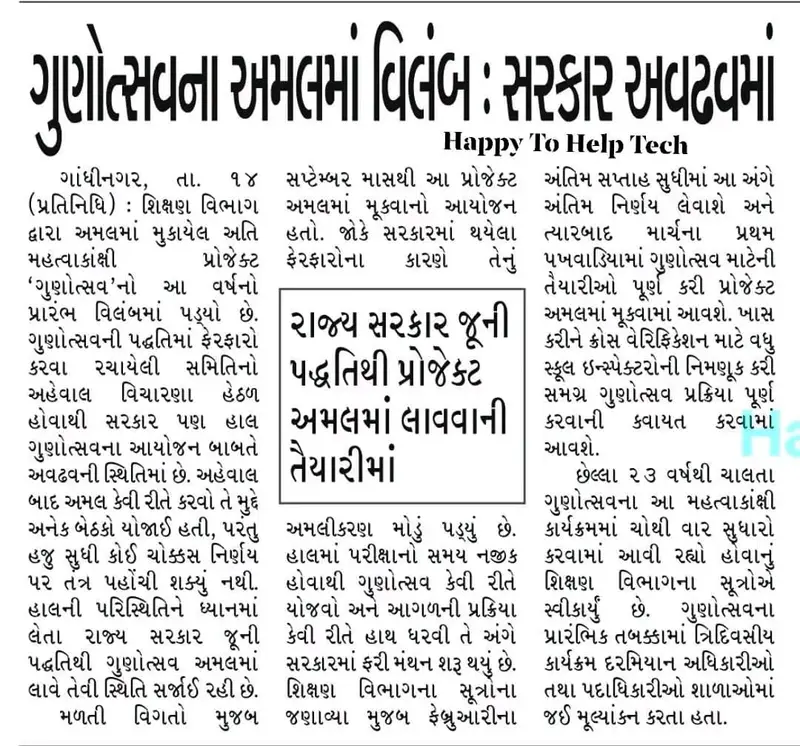
Gunotsav 2.0 Evaluation Guidelines
This video explains the specific marking criteria and updates for the Gunotsav 2.0 accreditation process used by Gujarat primary schools.